
Company B wants a predetermined rate for a new product that it will be launching soon. Its production department comes up with the details of how much the overheads will be and what other costs will be incurred. The estimate is made at the beginning of an accounting period, before the commencement of any projects or specific jobs for which the rate is needed.
- If you want to measure your indirect costs against direct labor, you would take your indirect cost total and divide it by your direct labor cost.
- The company estimates a gross profit of $100 million on total estimated revenue of $250 million.
- Their amount of allocated overhead is not publicly known because while publications share how much money a movie has produced in ticket sales, it is rare that the actual expenses are released to the public.
- It is often difficult to assess precisely the amount of overhead costs that should be attributed to each production process.
- You can calculate this rate by dividing the estimated manufacturing overhead costs for the period by the estimated number of units within the allocation base.
It’s a good way to close your books quickly, since you don’t have to compile actual manufacturing overhead costs when you get to the end of the period. Keep reading to learn about how to find the predetermined overhead rate and what this means. That is, a certain amount of manufacturing overhead is applied to job orders or products which is used to estimate future manufacturing costs. The predetermined overhead rate also aids companies in closing their financial predetermined overhead rate formula books more quickly as it allows them to avoid compiling actual overhead costs as part of their closing process. However, reconciling the difference between the estimated overhead rate and the actual overhead rate is still important, hence, companies should ensure this is done at the end of each quarter or each fiscal year. One of the advantages of predetermined overhead rate is that businesses can use it to help with closing their books more quickly.
Formula for Predetermined Overhead Rate
A savings account often limits the number of monthly transfers, while a checking account doesn’t. Cash management accounts typically come with a debit card for easy access, but you may have to pay a fee if you want to deposit cash. The best high-yield savings accounts provide the security of a savings account with the added bonus of a high APY.
- Also, it’s important to compare the overhead rate to companies within the same industry.
- In production, the predetermined overhead rate is computed to facilitate the determination of the standard cost for a product.
- Adam received his master’s in economics from The New School for Social Research and his Ph.D. from the University of Wisconsin-Madison in sociology.
- For factories that produce goods, the cumulative number of machine hours utilized for the good production is used.
- That amount is added to the cost of the job, and the amount in the manufacturing overhead account is reduced by the same amount.
- Based on the above information, we must calculate the predetermined overhead rate for both companies to determine which company has more chance of winning the auction.
By using this rate, companies can better understand and control their production costs. In this article, we will discuss the predetermined overhead rate, why it matters, and how to calculate it. Cost accountants want to be able to estimate and allocate overhead costs like rent, utilities, and property taxes to the production processes that use these expenses indirectly. Since they can’t just arbitrarily calculate these costs, they must use a rate. Of course, management also has to price the product to cover the direct costs involved in the production, including direct labor, electricity, and raw materials. A company that excels at monitoring and improving its overhead rate can improve its bottom line or profitability.
The predetermined overhead rate is not realistic
A predetermined overhead rate is an allocation rate given for indirect manufacturing costs that are involved in the production of a product (or several products). Larger organizations may employ a different predetermined overhead rate in each production department, which tends to improve the accuracy of overhead application by employing a higher level of precision. However, the use of multiple predetermined overhead rates also increases the amount of required accounting labor. Let’s say there is a company, ABC Ltd., which uses Labour Hours as the base for allocating Overheads. In the coming year, the company expects the total overheads to be $150,000 and expects that there will be 3,000 direct labor hours worked. After determining the manufacturing overhead cost and the allocation base, the last step in finding the predetermined overhead rate is to divide the manufacturing overhead cost by the allocation base.

The overhead rate, sometimes called the standard overhead rate, is the cost a business allocates to production to get a more complete picture of product and service costs. The overhead rate is calculated by adding indirect costs and then dividing those costs by a specific measurement. There are concerns that the rate may not be accurate, https://www.bookstime.com/ as it is based on estimates rather than actual data. In addition, changes in prices and industry trends can make historical data an unreliable predictor of future overhead costs. Finally, using a predetermined overhead rate can result in inaccurate decision-making if the rate is significantly different from the actual overhead cost.
What information do you need to calculate predetermined overhead rate?
Also, it’s important to compare the overhead rate to companies within the same industry. A large company with a corporate office, a benefits department, and a human resources division will have a higher overhead rate than a company that’s far smaller and with less indirect costs. The overhead rate is a cost allocated to the production of a product or service. Overhead costs are expenses that are not directly tied to production such as the cost of the corporate office.
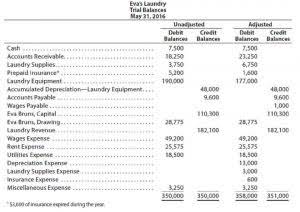
A predetermined overhead rate is an allocation rate that is used to apply the estimated cost of manufacturing overhead to cost objects for a specific reporting period. This rate is frequently used to assist in closing the books more quickly, since it avoids the compilation of actual manufacturing overhead costs as part of the period-end closing process. However, the difference between the actual and estimated amounts of overhead must be reconciled at least at the end of each fiscal year. The application rate that will be used in a coming period, such as the next year, is often estimated months before the actual overhead costs are experienced. Often, the actual overhead costs experienced in the coming period are higher or lower than those budgeted when the estimated overhead rate or rates were determined. At this point, do not be concerned about the accuracy of the future financial statements that will be created using these estimated overhead allocation rates.
Overhead expenses are generally fixed costs, meaning they’re incurred whether or not a factory produces a single item or a retail store sells a single product. Fixed costs would include building or office space rent, utilities, insurance, supplies, maintenance, and repair. Unless a cost can be directly attributable to a specific revenue-generating product or service, it will be classified as overhead, or as an indirect expense. The difference between the actual and predetermined amounts of overhead could be charged to expense in the current period, which may create a material change in the amount of profit and inventory asset reported.